The Third Field™ · A practice in relational intelligence

We have learned to measure the individual. We have never learned to read the space between.

Every team, partnership, and family lives or stalls in the space between its people: how they listen, decide, differ, and follow through. The Third Field makes that space visible, and gives the people in it one thing to do about it.

The blind spot

Two well-described people can still make a room that does not work.

For eighty years we have refined instruments for the individual: the type, the profile, the strengths report, the score. They are useful. They help people understand themselves, and they give teams a shared vocabulary. But they were built to describe a person, and no instrument built for that purpose can see what happens between two people who are each well described.

Put two capable, well-intentioned people in a room and the dynamic between them can still produce silence, drift, or a decision that everyone believes was made and no one can locate. That is not a flaw in either person. It is a condition of the space between them, and a condition can be read.

When you label a person, you locate the problem in someone, and the other person stops looking. When you read the field, both people can stand on the same side of the table and examine what they are making together.

Keep the tools. Add the thing they cannot do.

  • 20%of employees worldwide are engaged at work, and only 22% of managers. Gallup, 2026.
  • .65the correlation between a broken unspoken expectation and mistrust — larger than with pay, satisfaction or performance. Zhao et al., meta-analysis of 51 studies.
  • 3×the shareholder return for organizations in the top quartile of health. McKinsey.

Sources and the full argument are in our white paper, The Space Between (PDF).

The Third Field

Not mine. Not yours. The field between.

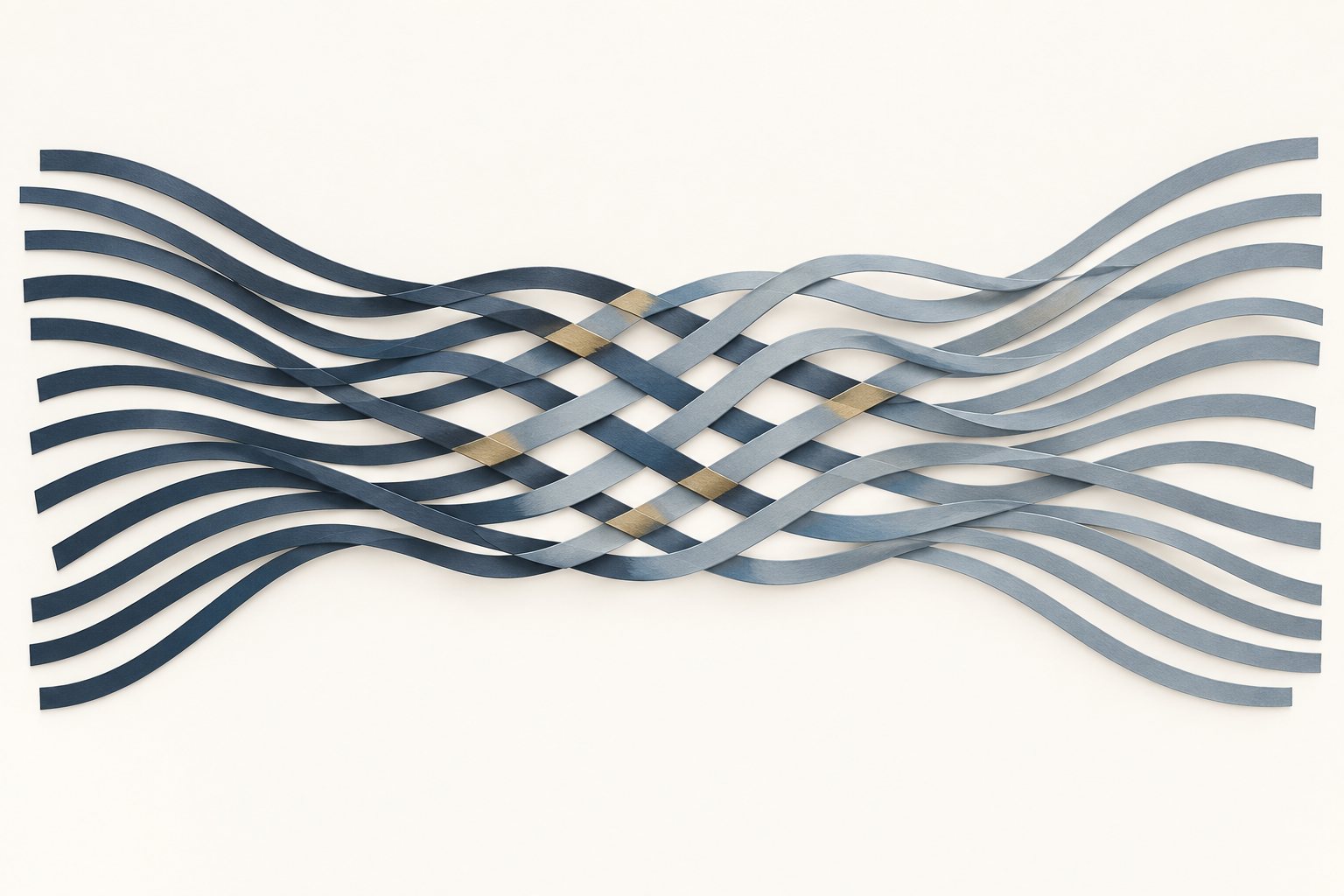
Two sets of ribbons, one ink and one slate, woven into a single pattern, with touches of gold where they cross
Neither person owns the third field. Both make it, every time they interact. It can be read, and once read, it can be worked on together.

When two people interact, three things are present. What the first brings: assumptions, intentions, everything not yet said aloud. What the second brings, of the same kind. And a third thing, which neither of them brought and neither of them owns: the way these two, together, in this situation, listen, decide, differ, and follow through.

We call that third thing the field between them. The practice is named for it, and four properties of it shape everything we do.

It is co-created.
No one person is the cause of what happens between two people, which is why labeling either of them entrenches the difficulty.
It is particular.
The same person is in a different field with each person they meet. There is no general reading, only this team, this couple, this moment.
It is legible.
Each person knows things about the field that the others do not. Gathered privately and read side by side, these become a picture no one could have drawn alone.
It changes when read.
A description leaves a personality unchanged. A field responds to being seen, which is why the reading must be careful, human, and short.

How the field is read

Your own page first. The shared one two days later.

  1. 1

    The Reflection

    Each person answers a short set of private questions online, in their own time. About twenty-five minutes. No one sees anyone else's answers, any question can be skipped, and each person decides, answer by answer, what may be used. Removing the room removes the performance.

  2. 2

    Your Folio

    One page comes back to you before anything is shared, written from your answers and nobody else's: where your attention kept going when it got hard, the calculation you have been keeping quiet and what carrying it has cost, the part this particular field invited you into, and one question to sit with. Nobody else ever sees it.

  3. 3

    The Relational Map

    Two days later, the shared page reaches everyone at the same moment: what you seem to share, the questions not yet asked aloud, and where the decisions actually stall. Positions are named. People are not.

  4. 4

    One working agreement

    Every Map ends in one agreement: a single, specific practice for the next month, chosen and worded by the people who will keep it. One, not seven, because one gets kept.

  5. 5

    The Return

    Thirty days on, one page brings the agreement back with the question you set yourselves. Keep it, rewrite it, or retire it — three equally good answers. An agreement that eroded tells you more than one that held.

YOUR FOLIO — PRIVATE TO YOU You Colleague Colleague Colleague four Reflections read, not used A Director writes it yours only Your Folio one page Built from what you wrote and nothing else. Nobody else sees it. THE MAP — TO EVERYONE AT ONCE You Colleague Colleague Colleague four Reflections A Director writes it all four The Map one page Positions are named. People are not. Nothing is quoted that its author reserved.
Your Folio is written from your own Reflection and nothing else. The shared Map is written from all of them, with nobody named.
Reflection 25 minutes, alone any question skippable Preview you see every line drawn from your answers Your Folio private to you one page, yours alone once confirmed The Map to everyone at the same moment One agreement small enough to try on a Tuesday thirty days The Return keep it, rewrite it, or retire it A Pulse — one question, whenever you ask for one
Your own page reaches you, for you to confirm, before anything is shared, so you arrive having already made peace with your own account rather than searching a group document for yourself.

No scores, no types, no verdicts. The Map describes the field, and it is written so that everyone in the room can recognize themselves in it without being exposed by it. This is a method rather than an intuition: the framework it reads by, and what every page keeps to, are set out in our white paper, The Space Between. See a page from a Map.

The self-directed practice works on its own. When the moment warrants a person in the room, a Director, an experienced practitioner from The Third Field, reads the reflections before anyone arrives, guides the gathering on the day, and decides and signs every word of the Map afterward. See how this is different.

Afterwards, a Pulse is one question put to everyone at once and returned to all of you together — asked when you want it asked, never running in the background. Nothing is ever monitored between readings.

What one looks like

One agreement, in the words of the people who will keep it.

Insight that does not change a Tuesday is not worth much. Every Map ends in a single practice, small enough to try and specific enough that in a month you can tell whether it happened. Three, as they were written:

Any decision one of us believes was made gets written in the doc within a day, by the person who believes it.
A leadership team of four
Neither of us hears anything that matters about this company from a third party first.
Two co-founders, year three
The money conversation happens on the first Sunday, for thirty minutes, and never at midnight.
A couple, first year of marriage

These are illustrative, written for this page. We never publish a group's Map or its agreement. See a full specimen page.

The Director

Paul Mola, seated, in a blue suit, smiling

Paul Mola brings more than two decades of leadership across life sciences, global partnerships and entrepreneurship to The Third Field.

This experience informs Paul’s approach as a Director: attentive to context, respectful of different perspectives, and focused on what people can do next.

Paul MolaFounder & Experience Director, The Third Field

Where the practice is applied

One practice. Every room where the space between people matters.

Leadership teams and co-founders · from $95 a seat

Are we actually aligned, or just polite?

Every leadership team is more aligned than its meetings suggest and less aligned than its strategy documents claim. The Team Map shows the gap between what you say together and what each of you believes alone, and yields one working agreement on the decisions that actually stall. For co-founders, an early, private reading of the one relationship everything else depends on.

For teams and leadership

Couples and partnerships · $195 for two

Do we know each other as well as we think?

A single, well-prepared conversation for two people at a threshold: getting serious, marrying, the first year, an anniversary, a decision. Each of you answers privately; together you receive a short shared reflection, the questions not yet asked aloud, and one practice to try.

For couples

Families, by arrangement. A Map for a family, for a holiday gathering, a reunion, or a parent's milestone, begins with a conversation with a Director, so that we understand what the family is hoping for and can say plainly whether this is the right kind of help. Write to us.

The setting

Where the practice happens when depth requires place.

Some readings want a day rather than an hour. Terroir Trails is The Third Field in Sonoma and Napa Valley: a private, chauffeured day with the appointments made and a long-table lunch, designed around the people at the table rather than the wine list. It exists to serve the reading, not the other way around.

Terroir Trails

Reading

White papers

The Space Between

Why the instruments we trust describe people and miss relationships, why an accurate account is hardest to deliver at the moment it matters, and how a relationship can be read. Thirty pages, every figure traced to a primary source, no form to fill in.

Essays

From the practice

Three things are present when two people meet. What you bring, what they bring, and a third thing neither of you brought and neither of you owns.

A few good questions

What is The Third Field?

A practice in relational intelligence. It reads what is happening between a particular set of people, in the situation they are actually in, rather than the personality of each one, and it delivers that reading as a Relational Map: a short shared reflection, the questions not yet asked aloud, and one working agreement.

Is this a personality test?

No. Nobody receives a type or a score. The Map describes the relationship, not the individuals in it, and it is only ever built from what each person chose to share.

Is it therapy?

No. The practice is for people who are not in crisis and would like to see the space between them clearly. Where a reflection suggests that clinical care is what is needed, we say so and refer.

Who is it for?

Leadership teams and the people who lead them, including co-founders. Couples at any threshold. Families by arrangement, beginning with a conversation. And, through Terroir Trails, anyone who wants a day in wine country designed around the people they bring.

What does it cost?

The self-directed Map is priced simply, per couple or per seat, and shown on the Pricing page. Director-led work is proposed after a conversation, in one page, with the fee stated. A first conversation is free.

How do we begin?

Choose who the Map is for, pay, and invite the others. Each person answers in their own time. Your Folio arrives within three business days of the last Reflection, and once everyone has confirmed theirs, the shared Map follows within two business days. Priority brings each step to the next business day. If you would rather talk first, write to us.

Not mine. Not yours.
The field between.